UNESCO mosaics, a harbour castle, rock tombs cut into the cliff, and the island's densest run of five-star seafront hotels.
Paphos is two towns stacked on a hill. Kato Paphos, at sea level, is the tourist half: the harbour with its squat medieval castle on the mole, the Archaeological Park behind it, and Poseidonos Avenue running east lined with the biggest concentration of four- and five-star beachfront hotels on the island. Ktima, the upper town 200 metres above, is where Cypriots actually live — the municipal market, Makarios Avenue, the old Ottoman quarter of Mouttallos and a slower, more honest set of coffee shops.
The archaeology is not a sideshow here, it is the reason the whole town is UNESCO-listed. The Archaeological Park sits directly behind the harbour and contains the House of Dionysos, the House of Theseus and the House of Aion, Roman villas whose floor mosaics are among the best preserved in the eastern Mediterranean. A kilometre north on the coast road, the Tombs of the Kings are Hellenistic rock-cut chambers with Doric columns carved out of solid stone, open to the wind and the sea. Both cost around €4.50 and both are punishing at midday.
At nine in the evening the harbour walk is packed and slightly touristy — waiters holding menus, boat trips advertised for the morning, fish priced by weight. Bar Street off Agiou Antoniou is the loud strip and it is unapologetically for the British package market, with karaoke and €4 pints. Go up to Ktima instead: Kennedy Square and the lanes around the market have proper tavernas where a meze is €18-24 and nobody is trying to sell you a boat trip. The two halves are ten minutes apart by car, twenty-five uphill on foot.
This is the strongest base on the island if what you want is a serious sea-facing hotel with grounds and a spa. Coral Bay, fifteen minutes north, has the best sandy swimming; the Akamas peninsula and Lara turtle beach start an hour beyond that. Skip Paphos if you want nightlife with locals in it, or if you are here in January and February, when a real proportion of Kato Paphos restaurants close and the town feels half-shuttered — though the walking weather is superb.
Where to stay in Paphos
Poseidonos Avenue is the main event: a four-kilometre run of beachfront hotels east of the harbour, five-stars at €190-320 in high season and €110-160 in spring, most with direct beach access, and a flat 15-25 minute walk into the harbour. Tombs of the Kings Road, one street back, is the value line — good four-stars at €80-130 with the sea a five-minute walk away. Kato Paphos around Agiou Antoniou is cheap and central but the bar noise runs to 3am in summer; ask which side your room faces. Coral Bay, 12 km north, suits families who want real sand. Ktima has almost no hotels but a growing set of restored stone guesthouses at €70-110, and it is the choice if you want to live like a resident. Avoid anything advertised as "sea view" on the inland side of Tafon ton Vasileon — the view is a car park.
Where to sleep
Hotels in Paphos
Visited in person, not pulled off a spreadsheet. Rates run the same or better than booking direct, and one tonne of carbon is removed per stay.
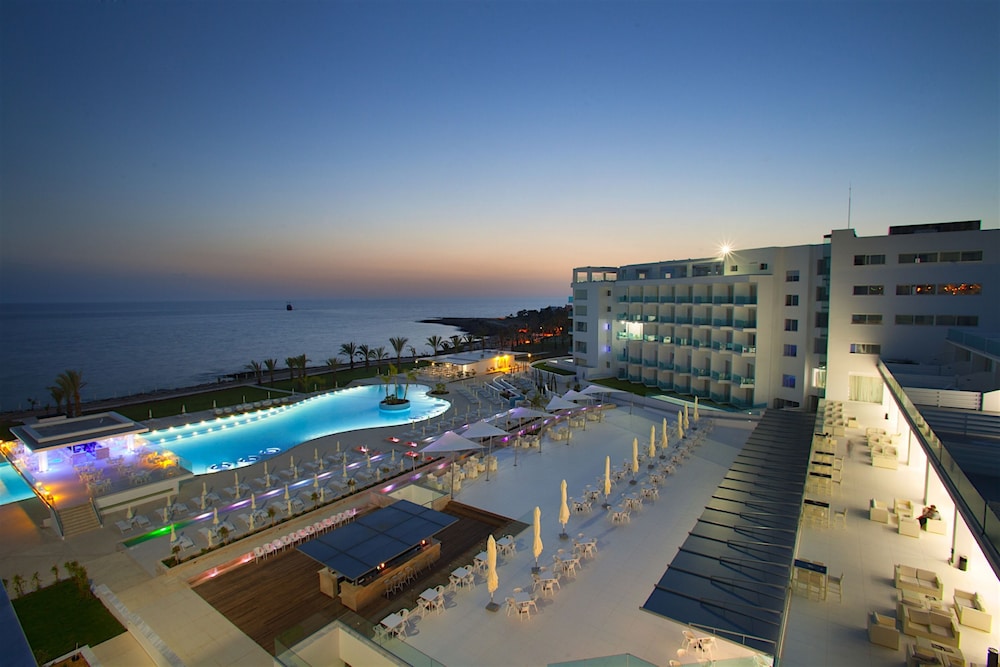 ★ 4.0
★ 4.0Paphos
King Evelthon Beach Hotel & Resort
Guest score 4.0 · Paphos. Booked at the live rate through app.impt.io.
Live priceReserve
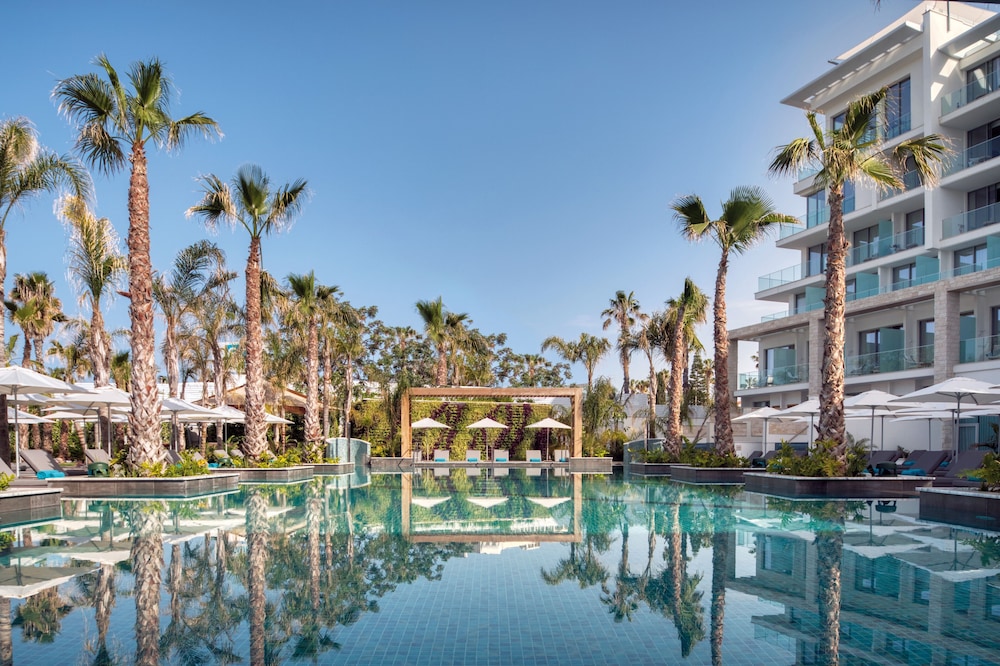 ★ 4.0
★ 4.0Paphos
Amavi MadeForTwo Hotels Paphos
Guest score 4.0 · Paphos. Booked at the live rate through app.impt.io.
Live priceReserve
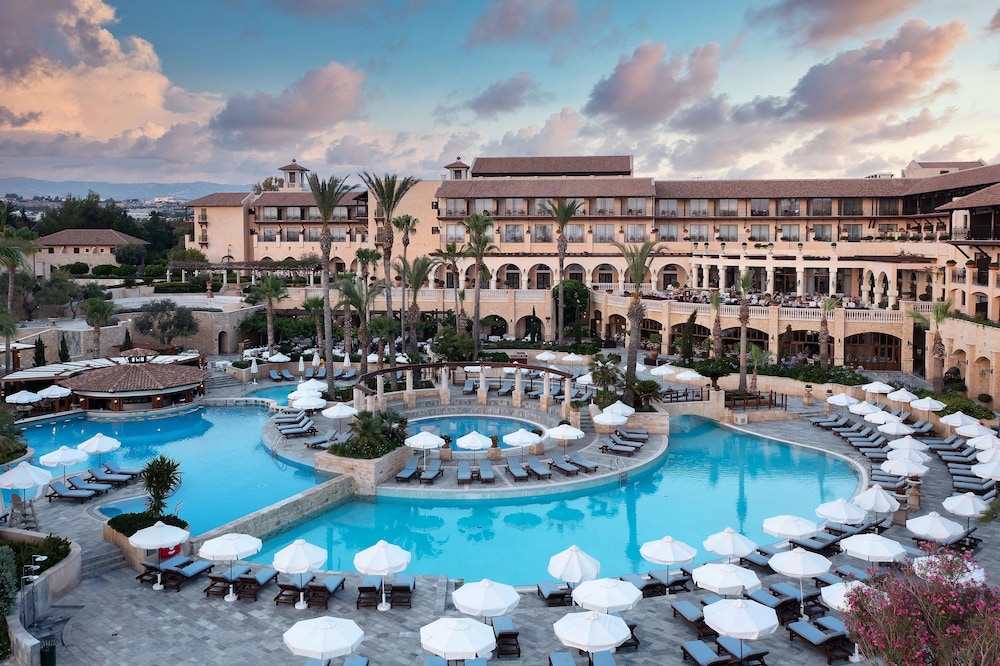 ★ 4.0
★ 4.0Paphos
Elysium
Guest score 4.0 · Paphos. Booked at the live rate through app.impt.io.
Live priceReserve
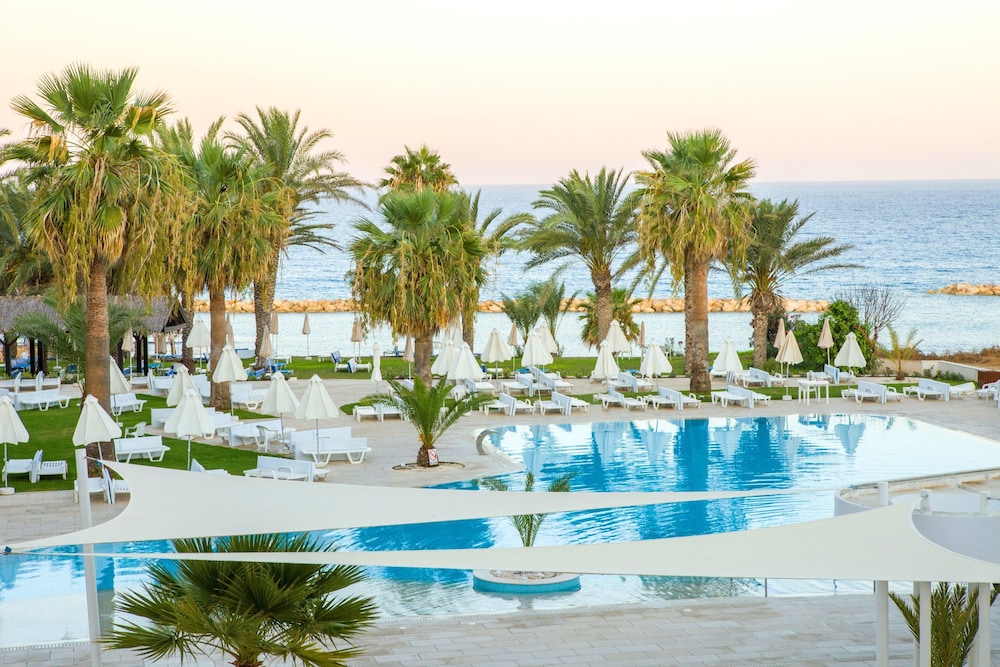 ★ 4.0
★ 4.0Paphos
Venus Beach Hotel
Guest score 4.0 · Paphos. Booked at the live rate through app.impt.io.
Live priceReserve
On the ground
Things to do in Paphos
- See the Roman mosaics in the Archaeological ParkEntrance on the harbour road, two minutes from the castle. About €4.50. The House of Dionysos alone holds over 500 square metres of floor mosaic under a modern roof; the Odeon and the lighthouse hill are included. Allow two hours and go before 10am — there is no shade on the paths.
- Explore the Tombs of the KingsTafon ton Vasileon Avenue, 2 km north of the harbour, reachable on foot along the coast path. Hellenistic burial chambers cut straight into the coastal rock, some with peristyle courtyards and Doric columns. Around €4.50, open until sunset in summer. Wear proper shoes; the ground is uneven limestone.
- Swim at Coral Bay instead of the town beachTwelve kilometres north via the E701, or bus 615 from Kato Paphos for €1.50. A 600-metre crescent of genuine soft sand between two headlands, lifeguarded in season, sunbeds around €5 a pair and a shallow entry that suits children. The nicest swimming within easy reach of Paphos.
- Drive to Petra tou Romiou at sunsetAphrodite's Rock, 25 km east on the B6 towards Limassol, about 25 minutes. There is a car park and a tunnel under the road to the pebble beach. Free. Late afternoon light is the point; the swimming is rough and the pebbles are hard on bare feet.
- Shop and eat in Ktima's municipal marketThe covered market off Agoras Street in the upper town, open mornings Monday to Saturday. Halloumi, village bread, olives and lace, with cafes at the edges serving coffee for €2. Combine it with the lanes of Mouttallos immediately west, the old Ottoman quarter, which almost no visitor climbs to.
- Visit Agios Neophytos monastery and its rock hermitageTen kilometres north-east of Paphos near Tala, about twenty minutes by car. The twelfth-century Enkleistra is a cave complex the hermit Neophytos carved himself, its walls covered in original Byzantine frescoes. Small entry fee, closed for a couple of hours at lunch, and far quieter than the coastal sites.
The essentials
Harbour, Tombs and the Coast Path (5 km)
Start at Paphos Castle on the harbour mole, walk the quay, then enter the Archaeological Park for the Dionysos mosaics and the Odeon. Exit north, pick up the seafront path past the Fabrica hill quarries and the lighthouse, continue along the low cliffs to the Tombs of the Kings, and return on the shore route past the Municipal Baths to the harbour.
Getting there & around
Paphos airport is 15 km east: bus 612 runs to Kato Paphos and 613 to the Karavella station in Ktima for €1.50, taking 25-35 minutes, and a taxi is €25-35. From Larnaca airport it is a 90-minute drive on the A1/A6, or the Kapnos coach for around €15. Locally, OSYPA buses cost €1.50 a single and €5 for a day pass; route 615 serves Coral Bay and route 611 works the Poseidonos hotel strip every 15-20 minutes in season. Kato Paphos to Ktima is a steep 25-minute walk uphill or a €7 taxi. You need a car for Akamas, Polis and Lara — buses do not go there usefully.
Good to know
Paphos, questions answered
Kato Paphos or the upper town — where should I stay?
Kato Paphos for the harbour, the archaeology and the beachfront hotels; that is where 95 percent of the rooms are. Ktima, the upper town, has a handful of stone guesthouses and a far more local feel, but you will drive or taxi down to the sea. Families and first-timers should stay low.
Is Paphos open in winter?
Partly. The archaeological sites, Coral Bay and the big hotels stay open, but a noticeable share of Kato Paphos restaurants and bars close from January to mid-March and Bar Street is dead. Daytime temperatures of 17-19C make it excellent for walking Akamas, poor for swimming.
How do I get to the Akamas peninsula and Lara Bay?
You need a vehicle. Tarmac runs as far as the Baths of Aphrodite near Latchi, roughly an hour from Paphos; beyond that the track to Lara Bay is rough and most hire agreements forbid it. Take an organised 4x4 trip at €50-70, or approach from Polis Chrysochous by boat.
Which beach near Paphos is best for swimming?
Coral Bay, 12 km north, for sand and shallow water. Faros/Geroskipou beach east of town is fine and less crowded. The town shoreline right by the harbour is rocky with platforms, good for a dip but not for children. Petra tou Romiou is photogenic and a bad swim.
Keep exploring
Nearby on the coast

11 stays
Coral Bay
Sheltered white-sand crescent 12 km north of Paphos with a bar-lined avenue behind and the Akamas sea caves beyond
Stays in Coral Bay ↗
3 stays
Pissouri
Hillside village and its cliff-backed bay midway between Limassol and Paphos, with the island's best sunset swim
Stays in Pissouri ↗
1 stays
Polis Chrysochous
Working Cypriot town at the top of Chrysochou Bay, 35 km north of Paphos, with the Akamas on its doorstep
Stays in Polis Chrysochous ↗Doing good is the business: every booking through Stay Paphos funds one verified tonne of carbon removal — same room, same price, no markup.
Search stays