National forest park headland of sea caves, arches and cliff paths between Ayia Napa and Protaras, with the island's clearest water.
Cape Greco is the blunt limestone headland at the island's south-eastern tip, protected as a national forest park and sitting exactly between Ayia Napa and Protaras. Nobody lives on the cape itself — it is juniper scrub, cliff paths, a chapel, a naval station and a set of sea caves and arches that produce the water colour every Cyprus poster uses. What people mean by "staying at Cape Greco" is the ring of hotels and villas on the Konnos bay and Protaras approach roads, five to ten minutes from the park gates.
The water here is the clearest on the island because there is no river outflow, no harbour and no sand to stir up — visibility of twenty metres is normal. Konnos bay, on the western side of the cape, is a horseshoe of pale sand between headlands with sunbeds at around €5 a pair and a beach bar that stays open until about 8pm. The sea caves on the southern cliffs are reached by a dirt road off the E307 and are free to visit; the famous natural bridge collapsed years ago, so ignore old photographs and head instead to the arches at Kamara tou Koraka.
Evenings are the odd part. The park closes to vehicles at sunset and the cape goes completely dark and completely silent, while three kilometres either side Ayia Napa's strip is at full volume and Protaras's Sunrise beach road is doing family-restaurant trade until midnight. Staying near Konnos means you choose your evening by which direction you drive. Nothing on the cape itself serves dinner. Cruise boats from both resorts anchor in the coves through the day and leave by six.
This is the base for divers, snorkellers, cliff walkers and anybody who wants premium sea views without Ayia Napa's noise — hotels here run €90 to €250 in high season, with a few genuinely luxurious clifftop properties above that. Skip it if you are here to walk to bars, if you want a supermarket on the corner, or if you are visiting between November and March, when much of the surrounding accommodation closes and the wind on the headland is brutal.
Where to stay in Cape Greco
The good bases are the clifftop and hillside hotels along the Konnos bay approach and the southern end of the Protaras strip around Ayia Triada, where four and five star properties with sea-facing rooms run €120 to €260 in July and €70 to €110 in May. Ask for a room facing south-west over Konnos rather than inland at the Ayia Napa road. The handful of villas on the Cavo Greco road give you privacy and a pool but absolutely nothing within walking distance. Avoid the cheap blocks on the Ayia Napa side of the cape near the Nissi road unless you want bass through the wall until 4am — that noise carries much further than the listings admit. Nothing on the cape itself is bookable; the park has no accommodation, and anything advertising a "Cape Greco address" is on one of the two approach roads.
Where to sleep
Hotels in Cape Greco
Visited in person, not pulled off a spreadsheet. Rates run the same or better than booking direct, and one tonne of carbon is removed per stay.
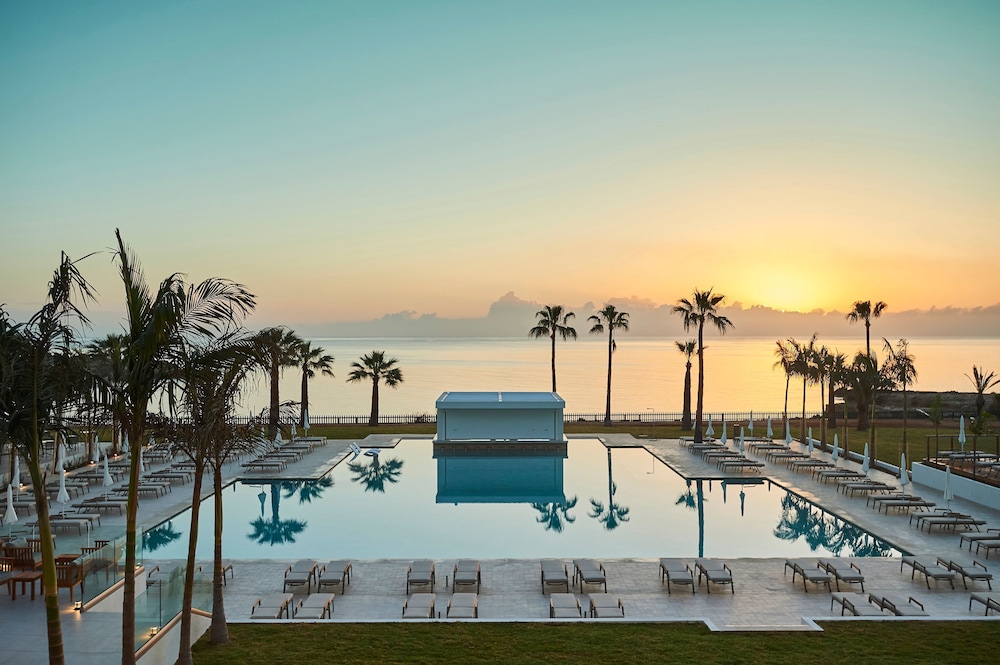 ★ 4.0
★ 4.0Cape Greco
Sunrise Jade Adults Only
Guest score 4.0 · Cape Greco. Booked at the live rate through app.impt.io.
Live priceReserve
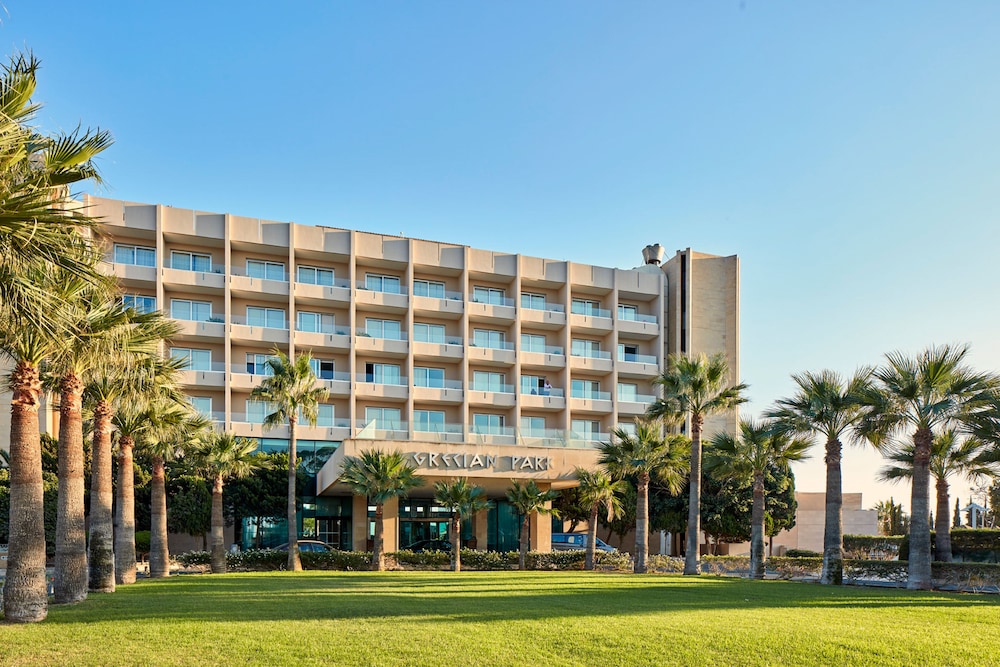 ★ 4.0
★ 4.0Cape Greco
Grecian Park Hotel
Guest score 4.0 · Cape Greco. Booked at the live rate through app.impt.io.
Live priceReserve
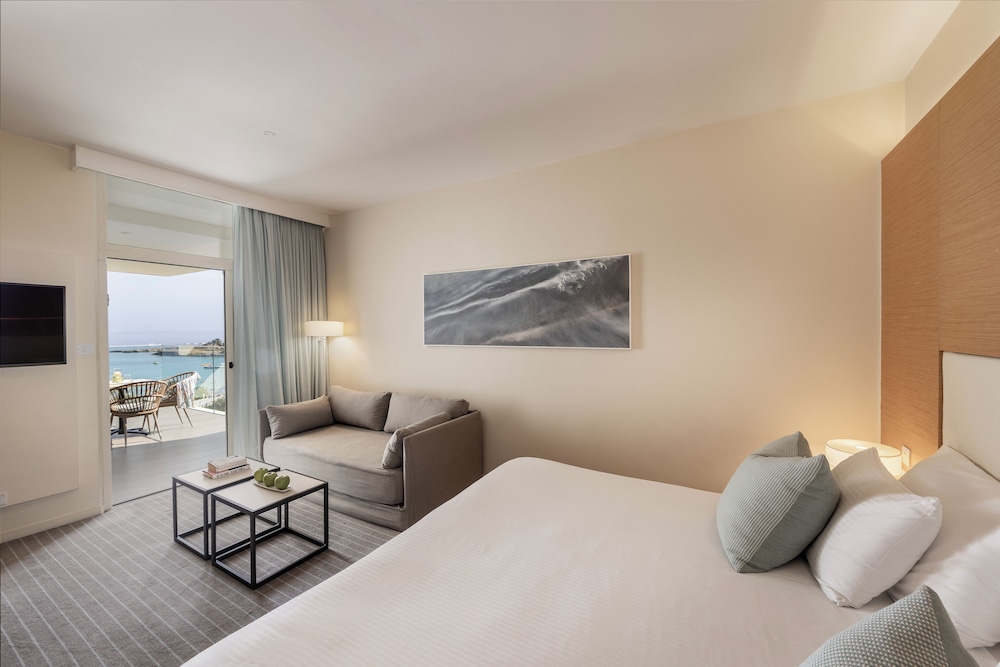 ★ 4.0
★ 4.0Cape Greco
Capo Bay Hotel
Guest score 4.0 · Cape Greco. Booked at the live rate through app.impt.io.
Live priceReserve
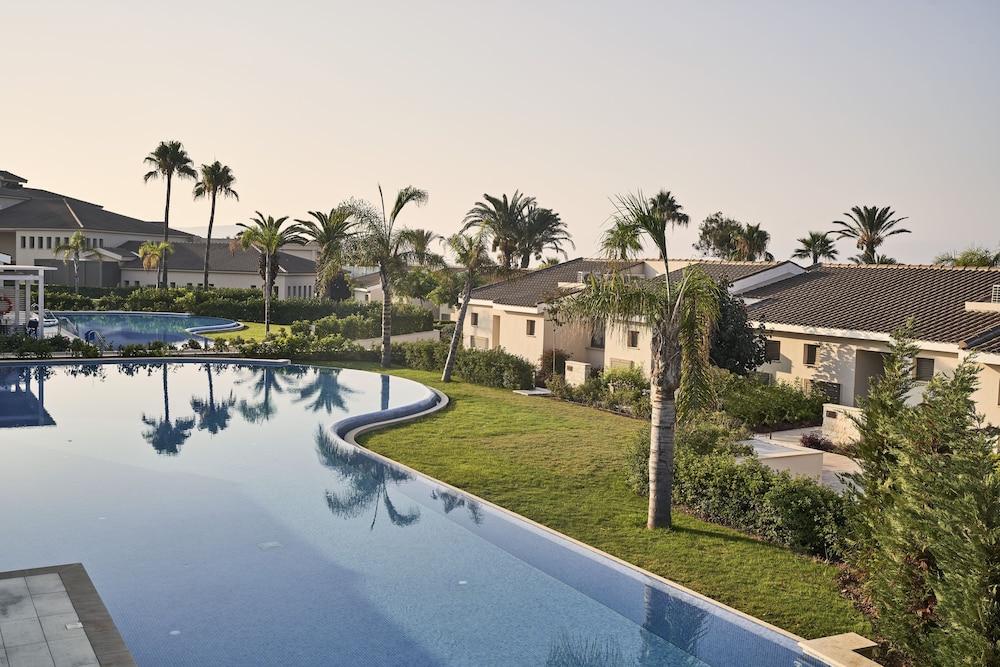 ★ 4.0
★ 4.0Cape Greco
Mare Ayia Napa
Guest score 4.0 · Cape Greco. Booked at the live rate through app.impt.io.
Live priceReserve
On the ground
Things to do in Cape Greco
- Snorkel the sea caves at Kamara tou KorakaFollow the dirt track off the E307 near the park's southern gate to the parking area above the cliffs, then take the steps down to the water. Arches, tunnels and a rock stack in five to fifteen metres of very clear water. No lifeguard, no facilities, and the rock ledges are sharp — bring reef shoes and go before 10am.
- Swim at Konnos bayThe horseshoe cove on the western side of the cape, signposted off the E307 between Ayia Napa and Protaras. Sunbeds about €5 a pair, a beach bar until roughly 8pm and a boat jetty. The steep access road means a long walk back up if you park at the top — the lower car park fills by 10.30am in August.
- Walk to the chapel of Agioi AnargyroiThe small white chapel on the eastern clifftop, reached by a signed track from the main park road. Below it, a stepped path drops to a sea cave where people swim off the rocks. Free and open all day; the cliff edge is unfenced, so keep children close. Sunrise here is the picture people come for.
- Cliff-jump or watch at the blue lagoonThe sheltered inlet on the north-west side of the cape, reached by boat from Ayia Napa harbour or on foot from the Konnos car park. Boat trips run about €25 to €35 for a half day with lunch. Jumping from the low ledges is common; the high ledges cause injuries every summer, so don’t.
- Dive the Zenobia wreck from Ayia NapaThe Swedish ferry that sank off Larnaca in 1980 is one of the world's top wreck dives, and the dive centres in Ayia Napa harbour, 8 minutes west, run trips at roughly €130 to €160 for two dives including kit and transfer. Advanced certification required for the deeper penetration; open water divers get the upper decks.
- Cycle the park loop roadThe paved and gravel loop through the juniper scrub from the northern gate past the naval station to the southern cliffs, around 6 km, closed to through traffic in parts. Bike hire in Protaras runs €10 to €15 a day. Do it early — the cape has no shade whatsoever and the limestone reflects heat.
The essentials
Konnos to the sea caves cliff path (6 km)
Start at Konnos bay car park, climb the stepped path onto the western cliffs, and follow the marked route around the headland past the viewpoint above the blue lagoon. Continue to the Agioi Anargyroi chapel, drop to the sea cave steps, then carry on along the southern cliff edge to the arches at Kamara tou Koraka. Two hours out, unshaded, exposed cliff edge throughout. Take two litres of water.
Getting there & around
Larnaca airport is 45 minutes via the A3 to the Ayia Napa exit, then the E307 across the cape; a taxi is €55 to €70 and airport shuttles to Protaras and Ayia Napa run around €20 a head. Locally, Osea bus route 101/102 loops between Ayia Napa and Protaras via the Cape Greco road roughly every 20 to 30 minutes in summer, with a single at about €1.50 and a day ticket €5; it stops at the Konnos turn-off but not down at the beach, leaving a steep 700-metre walk. Evening buses stop around 11pm, and the night bus only covers the Ayia Napa strip. For the caves and the park loop you need a car, a bike or a boat trip.
Good to know
Cape Greco, questions answered
Can you stay at Cape Greco itself?
No — the cape is a protected national forest park with no accommodation, no shops and no restaurants. What is sold as Cape Greco is the hotel and villa belt on the Konnos and Protaras approach roads, five to ten minutes away by car. Expect €120 to €260 a night for a sea-view four or five star in July.
Is the natural bridge at Cape Greco still there?
The best-known small arch collapsed some years ago, so photographs of it are out of date. The larger arch and stacks at Kamara tou Koraka on the southern cliffs are still standing and are more impressive anyway. Reach them by the dirt track off the E307 and take care — the cliff edges are unfenced and crumbling.
Which is better as a base, Ayia Napa or Protaras side?
Protaras side if you want family restaurants, a long sandy beach at Fig Tree bay and quiet after midnight. Ayia Napa side if you want the harbour, the dive centres and the nightlife strip. Both are within ten minutes of the cape by car, and bus 101/102 links them all summer.
When is Cape Greco too windy or too cold?
From November to March the headland catches everything the sea throws at it and the cliff paths get genuinely dangerous in a strong southerly. Much of the surrounding accommodation closes for the same months. April to June and September to October are the best windows: warm sea, walkable temperatures, fewer boats in the coves.
Keep exploring
Nearby on the coast

199 stays
Ayia Napa
The whitest sand and clearest water on the island, a superyacht marina, a sixteenth-century monastery — and clubs that run until 5am.
Stays in Ayia Napa ↗
438 stays
Protaras
Fig Tree Bay's shallow turquoise water, a chapel on a rock with 153 steps, and evenings that end at midnight rather than five.
Stays in Protaras ↗
56 stays
Pyla
The only village where Greek and Turkish Cypriots have always lived side by side, with a wide quiet beach below it.
Stays in Pyla ↗Doing good is the business: every booking through Stay Cape Greco funds one verified tonne of carbon removal — same room, same price, no markup.
Search stays